
Garden patio ideas that actually work in Cumbria
What stands up to Cumbrian weather, what looks right against local stone, and what to avoid.
Cumbria isn't Surrey
Most patio inspiration online is photographed in dry, south-facing London gardens. It's beautiful and most of it doesn't translate. Cumbria's weather, soil and architecture push design in a specific direction: surfaces that drain, materials that don't go green, and layouts that read against stone houses and rendered bungalows rather than Edwardian terraces.
This is a working installer's view of patio ideas that actually work in our area — Carlisle, Annan, Wetheral, Penrith, Dumfries and across the Borders.
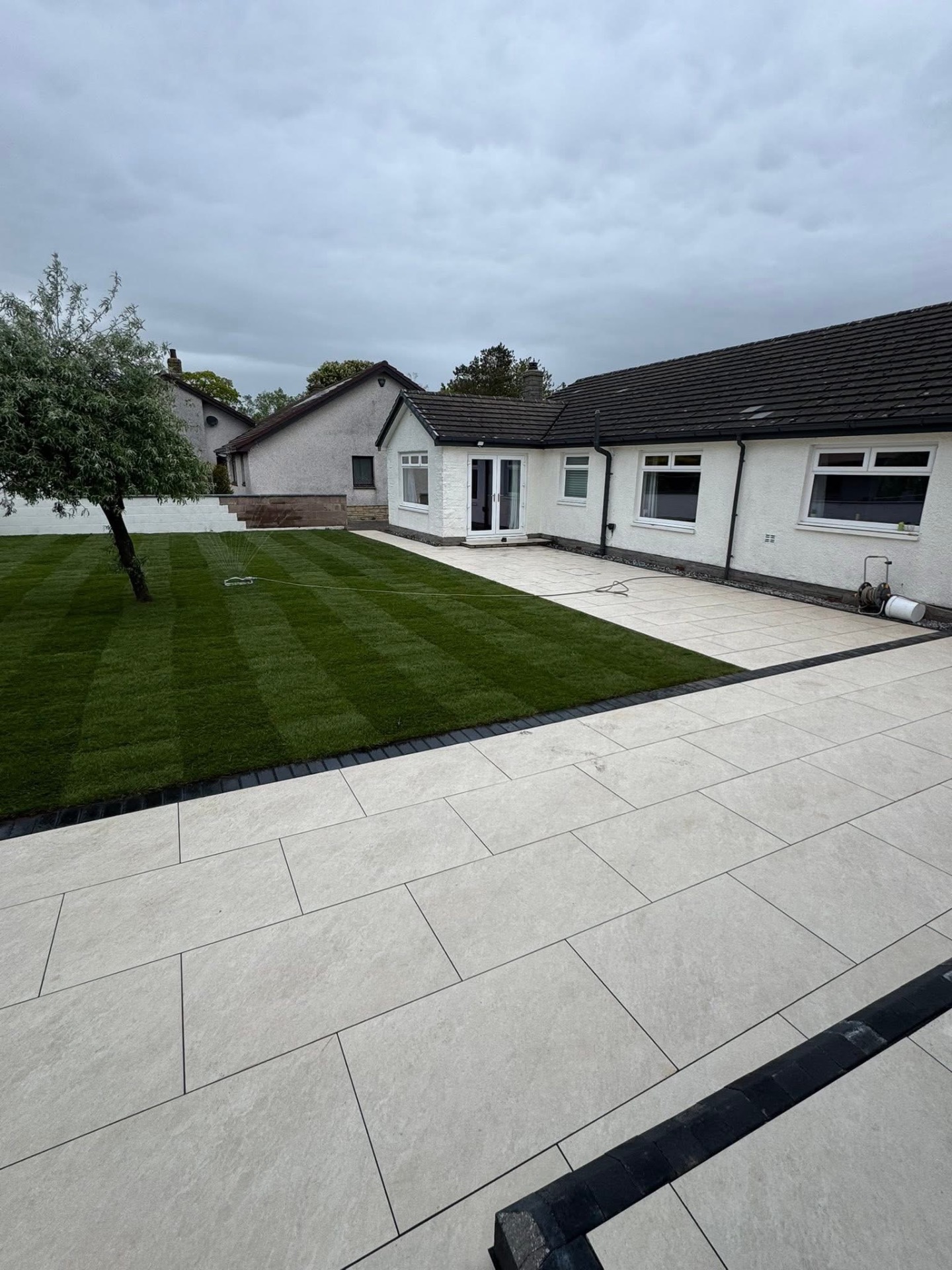
1. Large-format porcelain against a modern render
The single most-installed look in our 2024–2025 portfolio. 600x900 or 800x800 porcelain in soft grey or warm sand against white or off-white render. Sharp, low-maintenance, doesn't go green in shade, and reads as deliberate rather than dated.
Pair with a thin charcoal sett border (60 mm) for definition against grass or gravel. We do this on most porcelain installs — it's in the portfolio.
2. Sandstone flag with a defined lawn edge
For older houses — sandstone farmhouses, lime-rendered cottages, anything built before 1960 — calibrated Indian sandstone in a tumbled finish reads more honestly than porcelain. 600x600 or random pattern, with a clean steel-edge or stone-set border between paving and lawn.
The key with sandstone in our climate: a deeper sub-base than the supplier specs say, sealed joints, and an annual moss treatment in shaded areas.
3. Patio plus garden room
The fastest-growing brief we get. A patio that wraps the front of a garden room or pod, with a clear transition from interior floor level to exterior paving. Levels matter — we usually drop the patio 25–30 mm below the door threshold for water management, with a discreet linear drain at the building edge.
Specify the patio at the same time as the pod, not after. Retrofitting levels around an existing building is always more expensive than designing them together.
4. Small courtyard — under 15 m²
For terraced houses in Carlisle city and the town centres of Annan and Penrith. The mistake is to use small slabs — they make a small space look busier. Go the other way: one large format porcelain (800x800 or 1200x600), laid in a single direction, with a deliberate planted edge. The space reads larger.
If the courtyard is enclosed and shaded, porcelain is the only sensible specification. Sandstone will green up within a year.
5. Mixed material — porcelain and granite sett
For a more architectural feel: porcelain field with granite setts used as borders, banding, or as a separate "rug" inside the field where outdoor furniture sits. Looks expensive because it is — the cut-in time doubles — but it lifts the space significantly.
6. Outdoor kitchen patio
Plan the gas, water and electric routes during groundworks, not after. We've lifted enough patios to retrofit services to know this is the single most common regret. A 4 m x 3 m porcelain hardstand with services stubbed to a specific point costs almost nothing extra at build time and saves a lot of rework later.
What we'd avoid in Cumbrian conditions
Light limestone in shaded gardens. It goes green. There is no sealant that prevents it on a north-facing site.
Riven sandstone with deep texture for entertaining areas. Looks beautiful, but garden furniture wobbles on it and wine glasses don't sit flat. Use riven for paths and feature areas, calibrated for sitting and table zones.
Resin overlay on a failing concrete slab. If the slab is failing, the resin will follow it. Resin is a finish, not a structural fix.
Stamped concrete patios. They look fine for two years and tired forever after. The colour fades, the surface crazes, and they can't be sectionally repaired.
Patio surfaces flush with the grass. Looks clean on a Pinterest photo in California. In a wet Cumbrian winter it traps moisture against the edges, blackens the slab, and rots the lawn for 200 mm in. Always edge with sett or steel.
Specifying for the climate
Three things matter more in our climate than they would further south:
Falls. Minimum 1:80 away from the building. Standing water is the single biggest reason patios fail in winter — freeze-thaw lifts slabs and pops jointing.
Joint material. For porcelain in our weather, use a polymeric or two-part resin joint, not a sand-cement mortar. Sand-cement cracks with movement; the patio looks aged before it should.
Drainage outlets. If the patio sits between two buildings, or against a retaining wall, plan an outlet. "It'll soak in" is not a drainage strategy in Cumbria.
Summary
The patios that look best in our area in 20 years' time are the ones specified for the conditions: porcelain for low-maintenance and shade, calibrated sandstone for traditional settings, generous sub-bases, designed-in falls, and material choices that match the architecture they sit against.
If you've got a space in mind, send a couple of photos and a rough size. We'll come and walk it, give you a fixed price, and tell you honestly what we'd do.
Tell us about your space — we'll come and look.